Thursday, December 29, 2011
A Simpler Life
Horse-and-Buggy Mennonites is not the kind of book I usually pick up, but as this month's book club selection, I was willing to give it a try. Though it took me about two weeks to read it, and I was relieved that the last hundred pages were appendices and indexes, there was a lot of interesting information to be found.
Horse-and-Buggy Mennonites is a study of the Wenger Mennonites, an Anabaptist group centralized in Lancaster County. It follows their history, and the decisive split over the automobile, coming into present day beliefs and codes of behavior. Living in an area with a large Mennonite and Amish population, it was interesting to gain more insight into why they live the way they do and the process in deciding what technologies are acceptable and what should be banned. By making conscientious decisions about whether things like cars, rubber tires, phones, fax machines, or computers should be allowed and to what extent, the Wengers have not only remained intact in modern times, but are actually a thriving community with church districts in many states and a growing population.
One of the most important aspects of Wenger life is what the book refers to as the redemptive community. The Wengers do not consider the church to be a building; rather, it is the group of believers. As such, they support each other in times of need but also are a strong enforcing element, holding fellow believers to a higher standard of behavior and adherence to church rules than "outsiders" (that would be the rest of us). I found many of their practices, such as the emphasis on family, connection to the land, and supporting the community in times of need, to be things the world at large could use more of.
The book itself is a little dry to read, but it is packed full of information and anecdotes of a lifestyle I knew very little about, even having lived in areas with Mennonites and Amish all my life. I think anyone who wonders what the difference between Amish and Mennonites would enjoy reading Horse-and-Buggy Mennonites.
Wednesday, December 28, 2011
All I Want for Christmas
I can't believe I forgot to mention this in yesterday's post because it is big news around here...Bert has his two front teeth! His bottom teeth are both poking through and were visible by Christmas. We had been feeling them in the week leading up to Christmas but now they are definitely there. During the day, he doesn't seem too bothered by the teething, but he has been fussier at night and I'm guessing those chompers are to blame. Sorry, no picture. The little man won't cooperate for a good shot.
Tuesday, December 27, 2011
The Wrap Up
The Christmas weekend passed in a whirl of driving, visiting, eating, visiting, eating, eating, eating, and driving. Oh, and some story reading, present opening, cow watching, and catching naps where and when you could. Would you like to see that in picture form?
Christmas may be over on the calendar, but we haven't stopped celebrating yet! We still have grandparents, great-grandparents, aunts, uncles, and cousins to catch up with this week before we call it quits on Christmas. Though from that last picture, you would think Bert has had enough!
| Keith reads "The Night Before Christmas" to a cranky Bert |
| Who needs another cookie anyway? |
| The tape was much more interesting than the present |
| A happy Bert ready to open his stocking |
| Bert's first encounter with Popper's cows |
| Catching a nap on the walk home from the barn |
Friday, December 23, 2011
Ambition vs. Reality
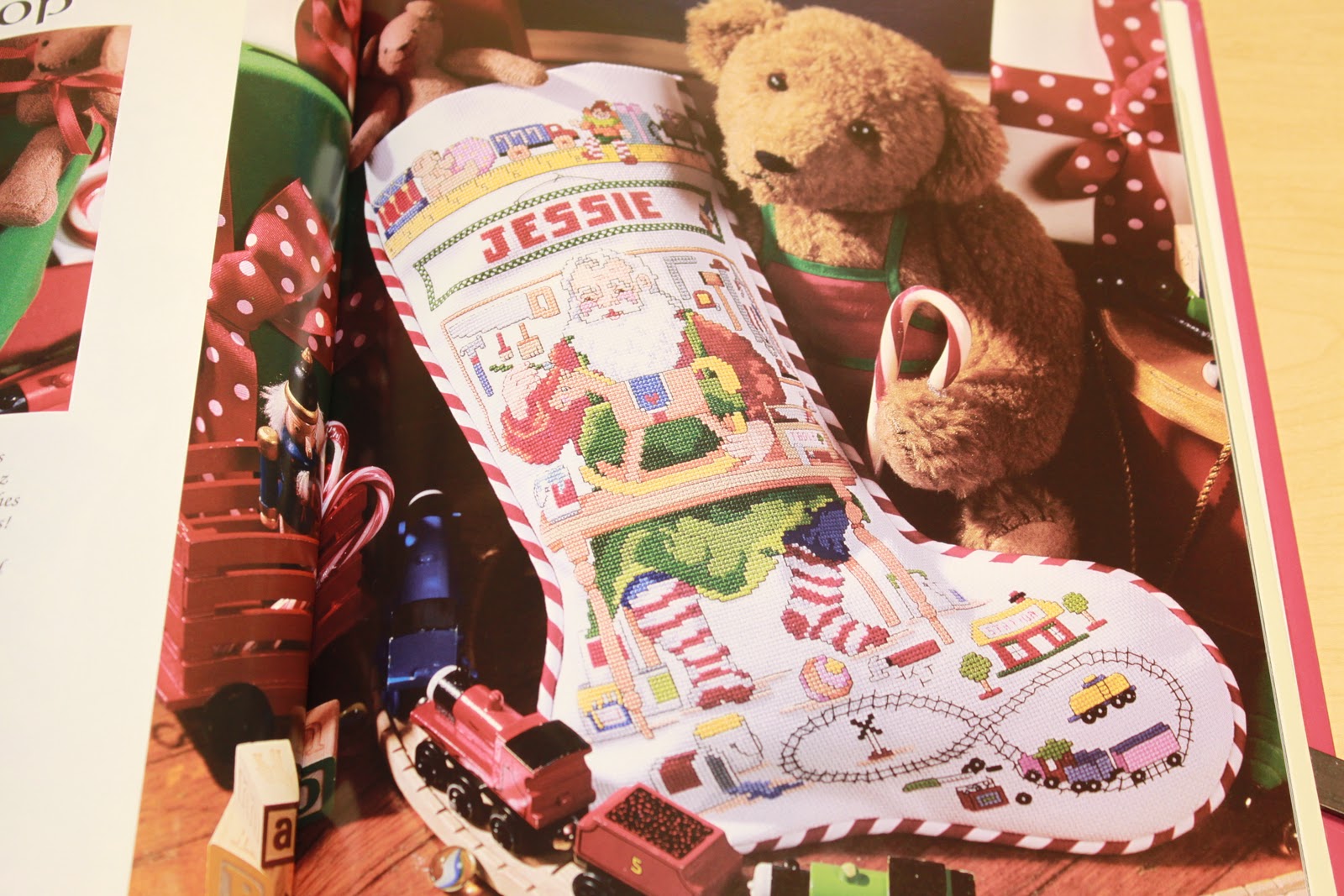
In mid-October, I had the brilliant and ambitious idea to cross-stitch a Christmas stocking for Bert. I ordered a book of patterns, picked one and promptly got started. This is the picture in the book:
Here's a look at the two (yes, two) pages of the pattern and charts:
And here is how far I got, as Christmas rapidly approaches:
Apparently, I should have started this as soon as I knew I was pregnant. It would certainly be a lot easier to concentrate on without Bert and his myriad of needs and demands. I can only hope that it is done by next Christmas. I'm showing all of you this so that you can prod me along to getting it finished!
Here's a look at the two (yes, two) pages of the pattern and charts:
And here is how far I got, as Christmas rapidly approaches:
Apparently, I should have started this as soon as I knew I was pregnant. It would certainly be a lot easier to concentrate on without Bert and his myriad of needs and demands. I can only hope that it is done by next Christmas. I'm showing all of you this so that you can prod me along to getting it finished!
Thursday, December 22, 2011
Fudging It
I would be hard pressed to say what my favorite holiday treat is. Peanut butter kiss cookies? Pizzelles? Snowballs? Eggnog? Peanut butter fudge?
Ok, it's probably peanut butter fudge. Peanut butter fudge has been a Christmas staple for as long as I can remember and Keith and I have been making it for family and friends since the first Christmas we were married. The recipe my family uses is really simple and nearly fool-proof.
Peanut Butter Fudge
3 cups sugar
1 cup milk
Boil to soft ball stage. (235-240 degrees F if you have a candy thermometer, or drop a bit from a spoon into a small cup of cold water; when you can pick it up and roll it into a ball, it's ready.) Be sure to stay close by and keep stirring it. If you boil it past the soft ball stage, the fudge will be crumbly.
Add 1 jar of marshmallow cream (7 oz.) and 1 jar of peanut butter (18 oz). (I like to have these out of the jars and in a large bowl and then pour the sugar and milk combination in.)
Stir until well blended.
Pour into greased square baking pan and let cool. (To give as gifts, we line tins with wax paper and pour the fudge directly in.)
Simple, right? Try to give most of it away or you will end up eating far more than you should!
Ok, it's probably peanut butter fudge. Peanut butter fudge has been a Christmas staple for as long as I can remember and Keith and I have been making it for family and friends since the first Christmas we were married. The recipe my family uses is really simple and nearly fool-proof.
Peanut Butter Fudge
3 cups sugar
1 cup milk
Boil to soft ball stage. (235-240 degrees F if you have a candy thermometer, or drop a bit from a spoon into a small cup of cold water; when you can pick it up and roll it into a ball, it's ready.) Be sure to stay close by and keep stirring it. If you boil it past the soft ball stage, the fudge will be crumbly.
Add 1 jar of marshmallow cream (7 oz.) and 1 jar of peanut butter (18 oz). (I like to have these out of the jars and in a large bowl and then pour the sugar and milk combination in.)
Stir until well blended.
Pour into greased square baking pan and let cool. (To give as gifts, we line tins with wax paper and pour the fudge directly in.)
Simple, right? Try to give most of it away or you will end up eating far more than you should!
Wednesday, December 21, 2011
Shalom in the Home
Last night we celebrated the first night of Hanukkah, and Bert's first first night of Hanukkah. For us, lighting the Hanukkah candles is a nod to my Jewish heritage and a reminder to slow down and enjoy simple things, like the flickering of candles, in our busy lives. Keith always has a few small, thoughtful Hanukkah gifts for me, and even Bert had something to open.
While I'm thinking of it, I would also like to share a prayer for travelers I came across, as we all get ready to travel to see family and friends for the holidays. Or in the case of my cousin, you are getting ready to take the trip of a lifetime to Israel!
May God direct your steps toward tranquility and keep you from the hands of every foe.
May you be safe from all misfortune on this earth.
May God grant you mercy in his eyes and in the eyes of all who see you.
Happy Hanukkah to those of you who celebrate it, and to everyone else, may you experience all the wonder and miracles of this happy season!
Tuesday, December 20, 2011
A Bridge to Another Time
If you haven't noticed, there is a new tab at the top of the page titled "Ex Libris." I am going to start filling you in on what I'm reading and that page will contain a running list of what I've read and link to the review posts (like this one). This serves two purposes: 1) you get to find out a little bit more about me and maybe some good book suggestions, and 2) I have something to write about all winter long while quarter-acre hibernates. Books and baby pictures; that's what you're getting this winter.
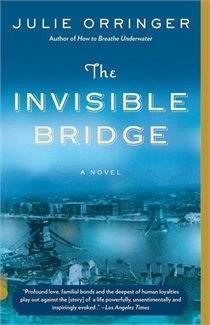
The Invisible Bridge is the story of Andras Levi, a Hungarian Jew who leaves his home to study architecture in Paris in the late 1930s. There he finds friendship, love, and a passion for his art while struggling against prejudices, secrets, and the threat of war. As the war escalates and consumes Europe, Andras is required to return to Hungary and then to the harsh world of the forced labor camps. Resourcefulness, luck, and the strength of the love between family and friends pull the characters through unthinkable difficulties and draw the reader into their lives.
The depth and authenticity of the characters made The Invisible Bridge captivating. The triumphs they achieved, the struggles they overcame or succumbed to, and the emotions they experienced all felt real and believable. The period of the book, which begins in 1937 and continues past the end of World War II, is a familiar one in history and literature but Orringer broadens the scope of the times as Andras bears up against the horrors and uncertainties of being conscripted into the labor battalions of eastern Europe.
I found the book to be engaging and powerful. The story spanned more than a decade, but I didn't feel that the author had to hurry the pace to cover that much time. In fact, the pages were rich with day-to-day details of the characters' lives, in times of relative peace and in the midst of heartache, that made the book convincing. Stories of survivors of World War II and the Holocaust, both fiction and historical accounts or memoirs, are among my favorite books to read and The Invisible Bridge did not disappoint.
The Invisible Bridge by Julie Orringer
The depth and authenticity of the characters made The Invisible Bridge captivating. The triumphs they achieved, the struggles they overcame or succumbed to, and the emotions they experienced all felt real and believable. The period of the book, which begins in 1937 and continues past the end of World War II, is a familiar one in history and literature but Orringer broadens the scope of the times as Andras bears up against the horrors and uncertainties of being conscripted into the labor battalions of eastern Europe.
I found the book to be engaging and powerful. The story spanned more than a decade, but I didn't feel that the author had to hurry the pace to cover that much time. In fact, the pages were rich with day-to-day details of the characters' lives, in times of relative peace and in the midst of heartache, that made the book convincing. Stories of survivors of World War II and the Holocaust, both fiction and historical accounts or memoirs, are among my favorite books to read and The Invisible Bridge did not disappoint.
Subscribe to:
Posts (Atom)